
“The Knight in Panther Skin” - FW 25/26
Meet Bullneck Ballerina: The Best Band You’ve Never Heard
I was first introduced to Bullneck Ballerina at the funerary party of a now-defunct punk venue. I spent the majority of the night lamenting my seemingly newfound lack of interest in live music; thank god, I thought, for the couch by the wall, lest I would’ve had to stand up and sway to uncompelling sounds. I was reminded of an archival review I read of Juliana Hatfield in which she was labelled “shoegaze;” the review pre-dated the contemporary meaning of the word, instead referencing the lackadaisical performance as so boring, it could result in nothing other than gazing down at one’s shoes (no offense to Juliana; I don’t think she’s boring). Something shifted after a set change, though, and I found myself drifting upwards. Whatever band was playing, I was into. I kept turning to my friends, pointing and saying, “They’re actually good, right? Like, this is actually good music?” One friend had a broken toe and was relegated to the couch, but braved a stint upright with a crutch to look at the stage. There was something of Gang of Four, something of Crisis, but the vocals were more earnest than authoritative. There was something of Unwound, but with more reverb. I’m almost tempted to say they remind me of Lync, but it actually feels vice versa despite the anachronism (and Bullneck Ballerina isn’t emo). Some bit of shoegaze (in the current, non-derogatory sense) creeps in here and there, but there’s something too sharp about the sound.
I kept an ear cocked in between each song to try to catch their name, but to no avail. I say in all seriousness, though, that I had spent the first half of the night in complete resignation to the idea that my days of seeing live shows were over; my optimism in live music, and perhaps in contemporary music at large, was resurrected by this band, whoever they were. When a friend and I spotted a member near the bar, I begged her to investigate. I would later recognize the accosted musician as Jona, who informed my friend that they were new, they weren’t sure when they were playing next, they were happy to hear we liked it, and oh, yeah, they were called Bullneck Ballerina.
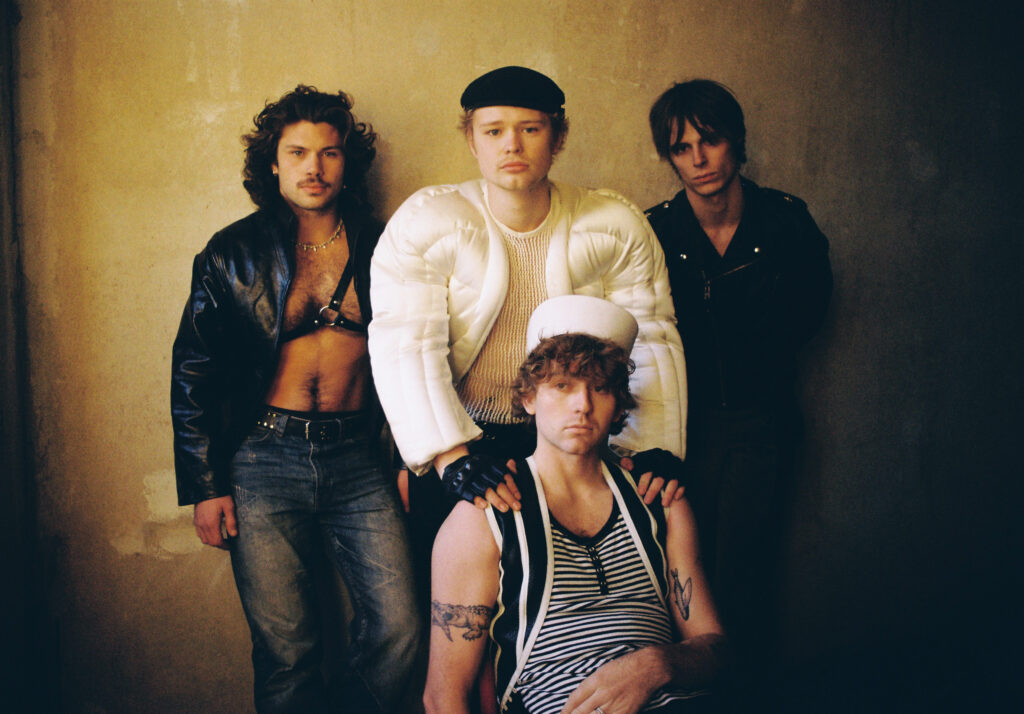
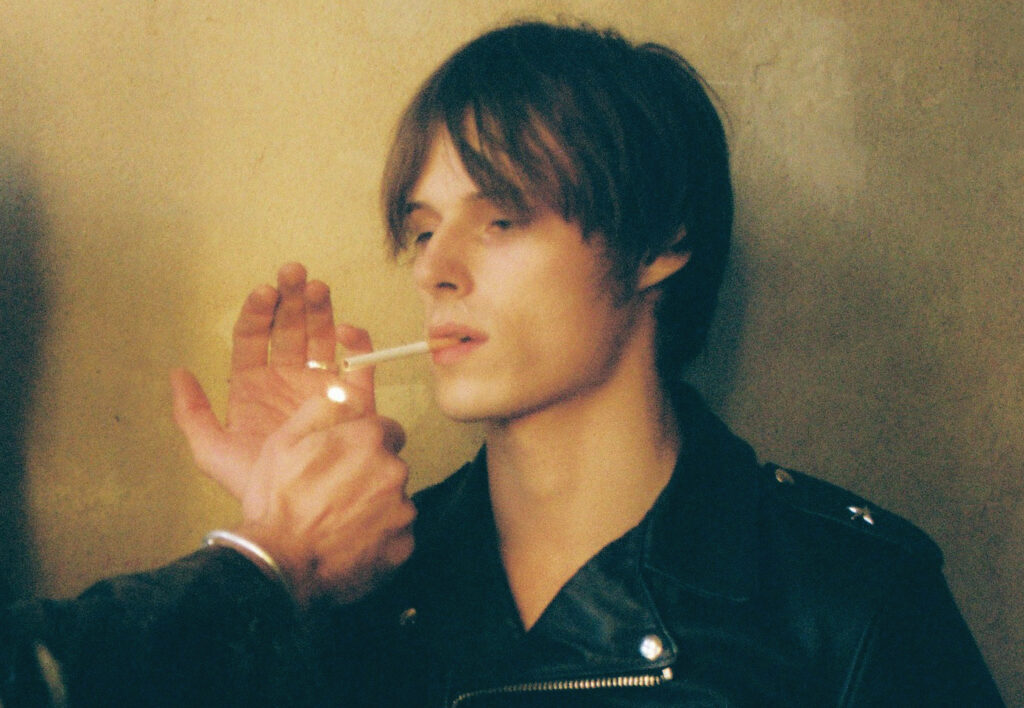
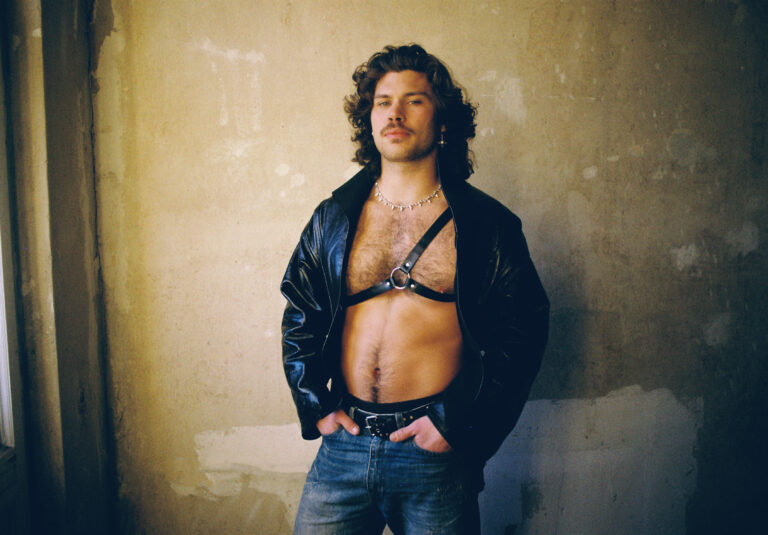
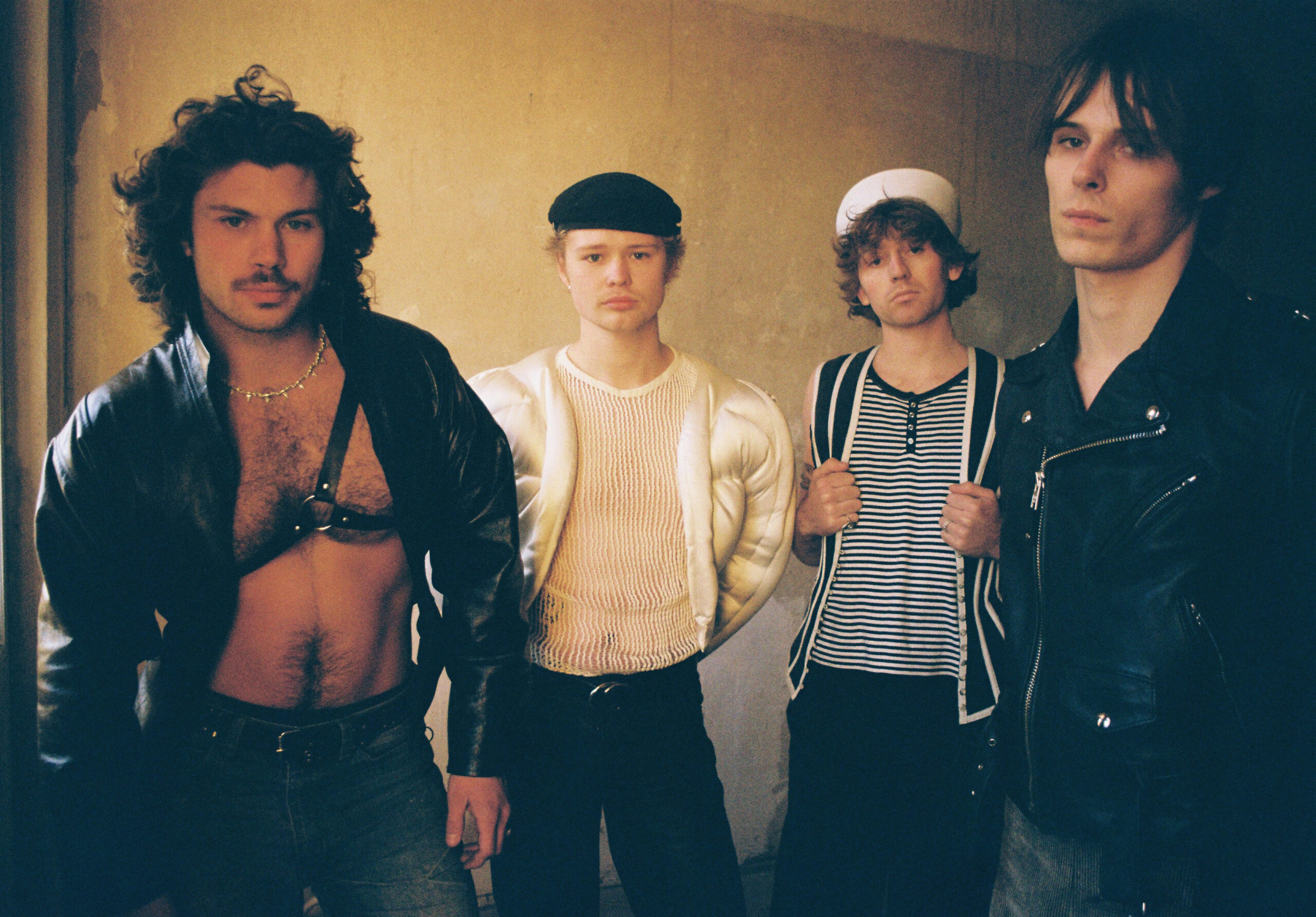
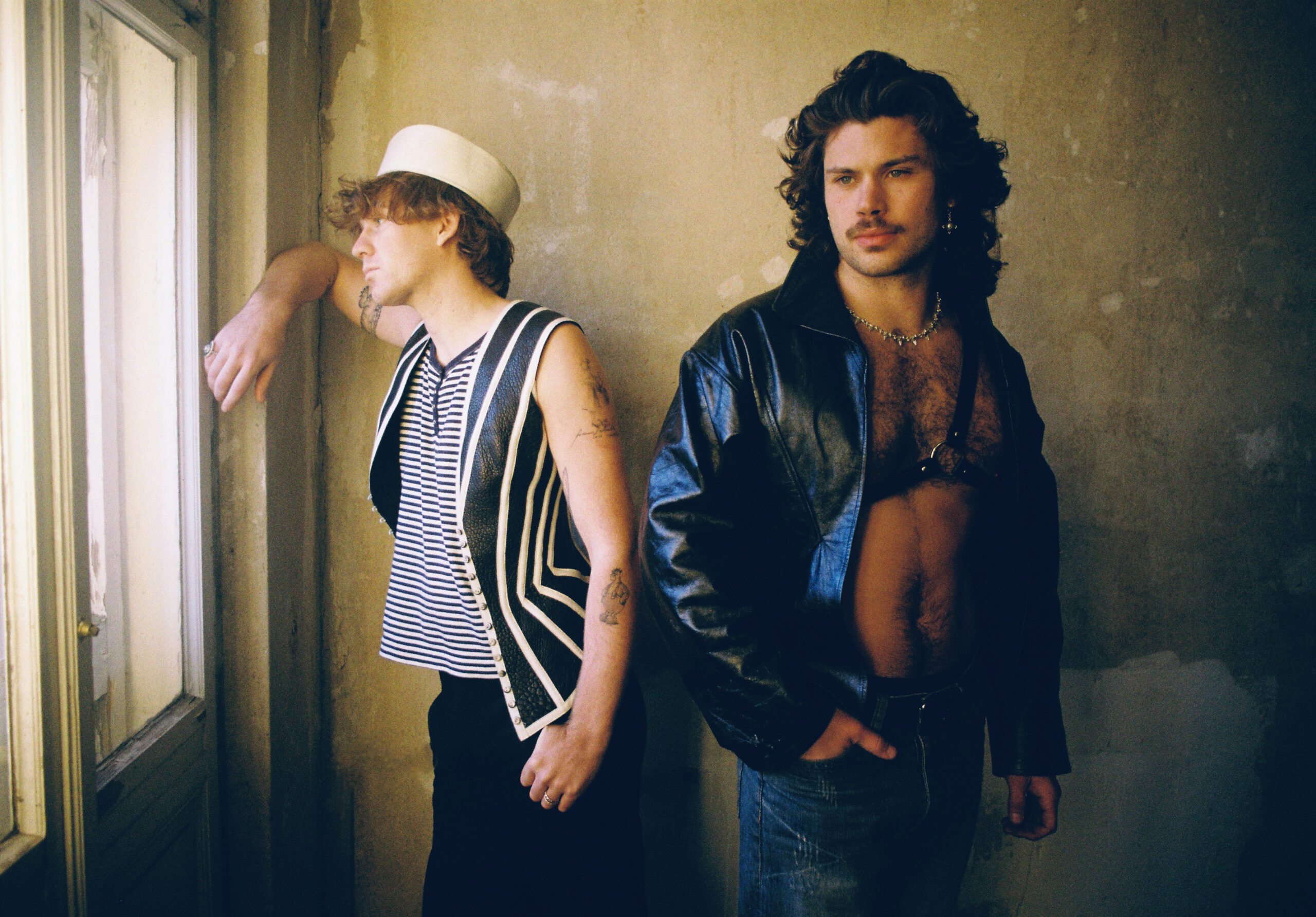
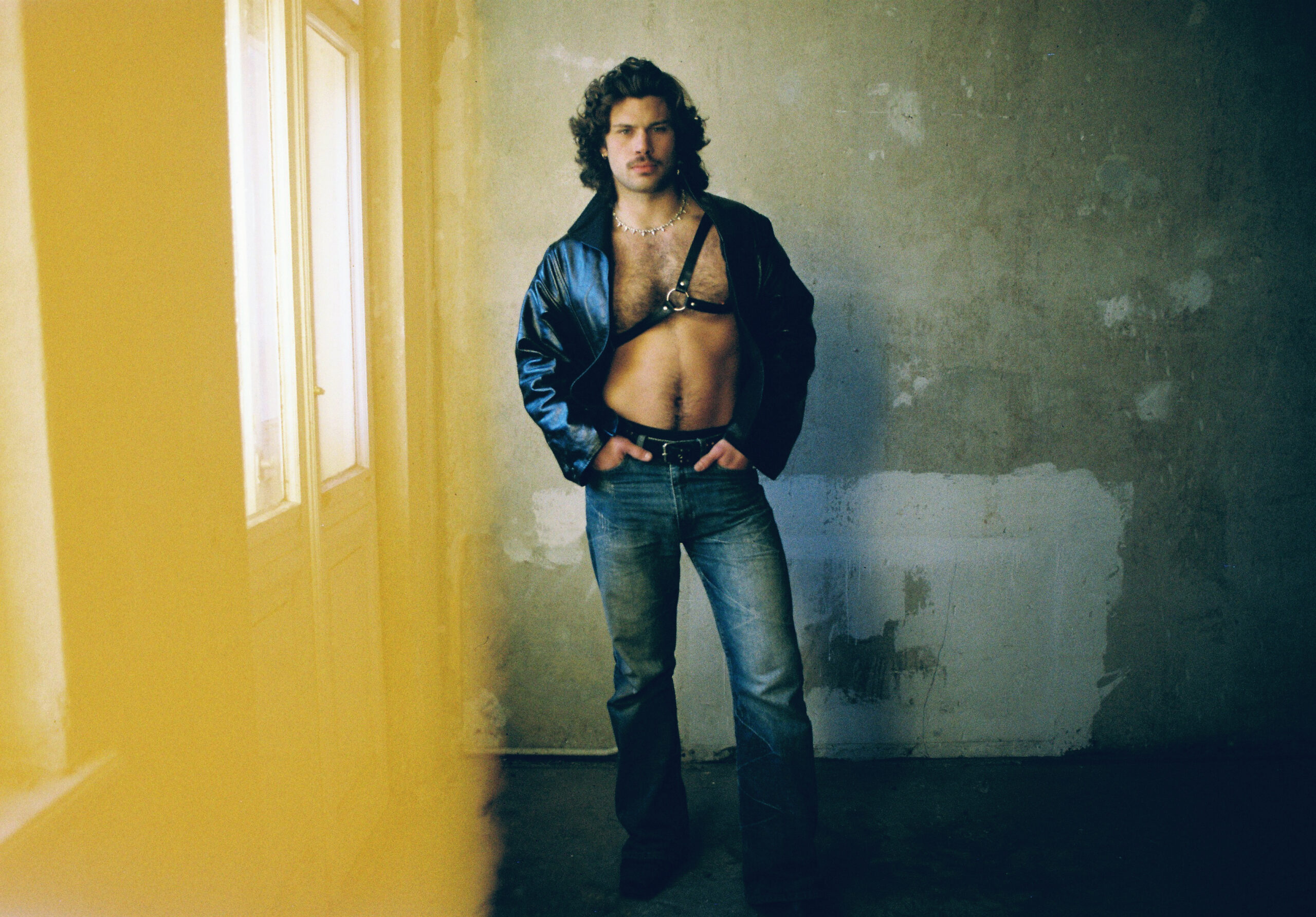
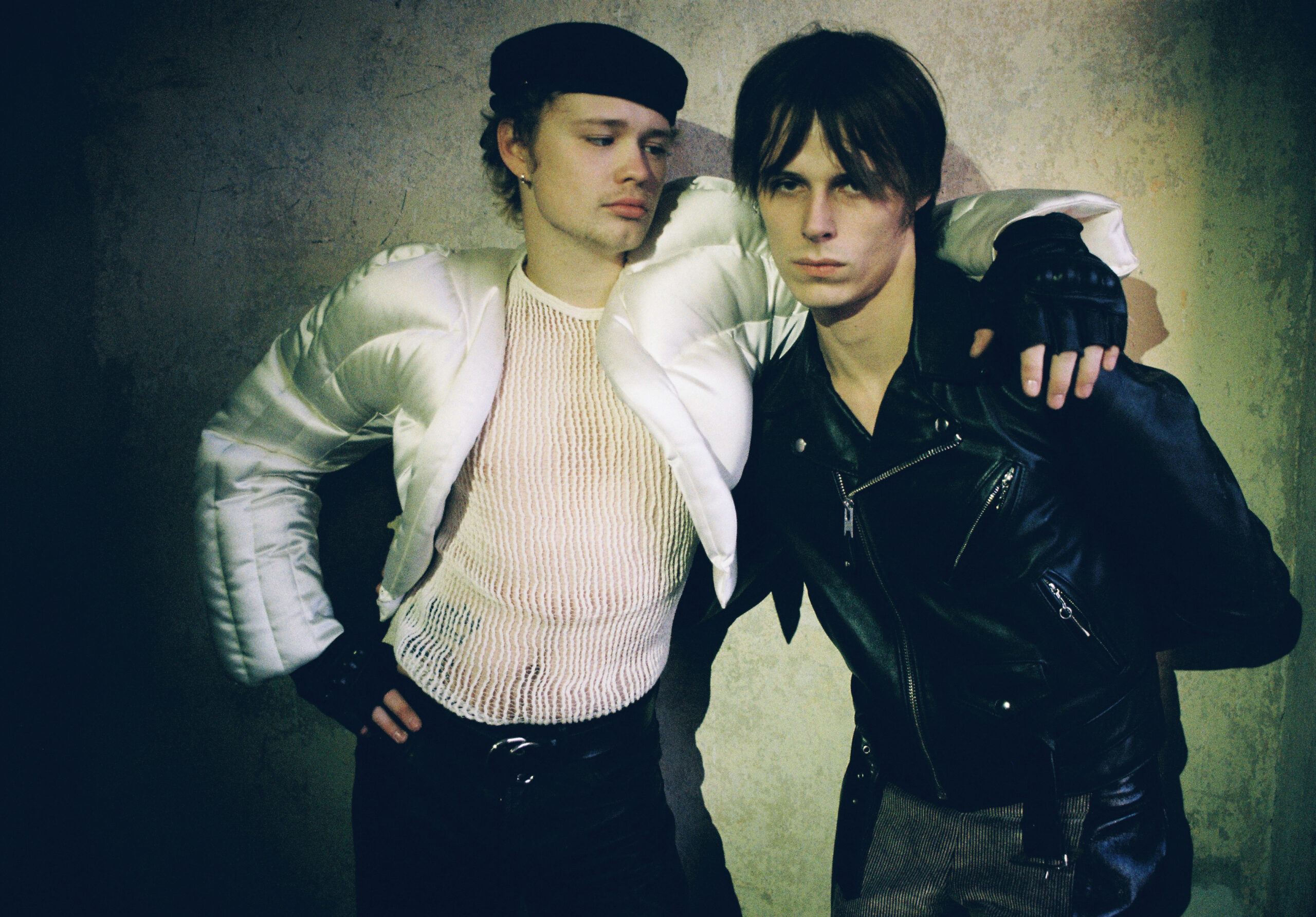
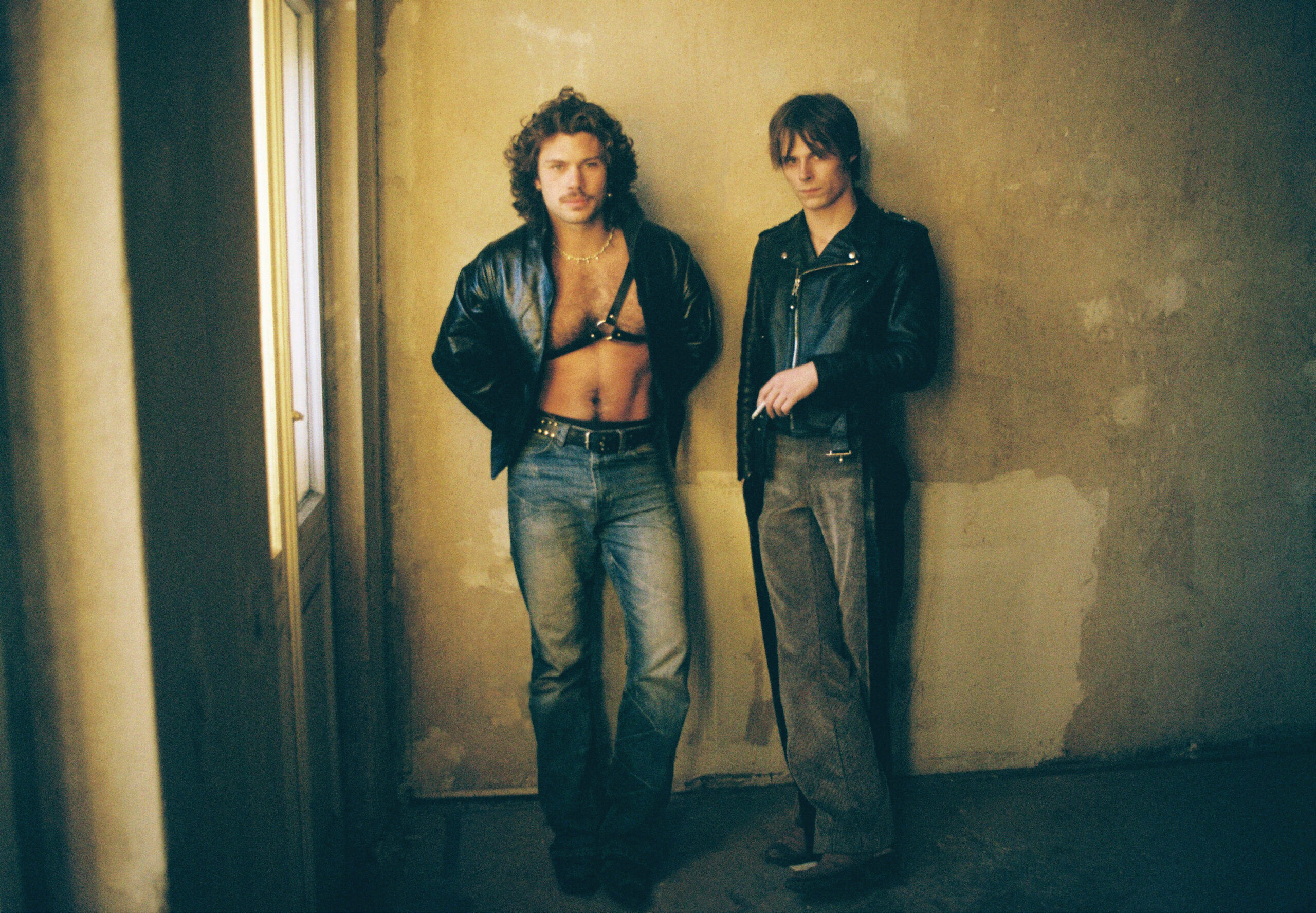
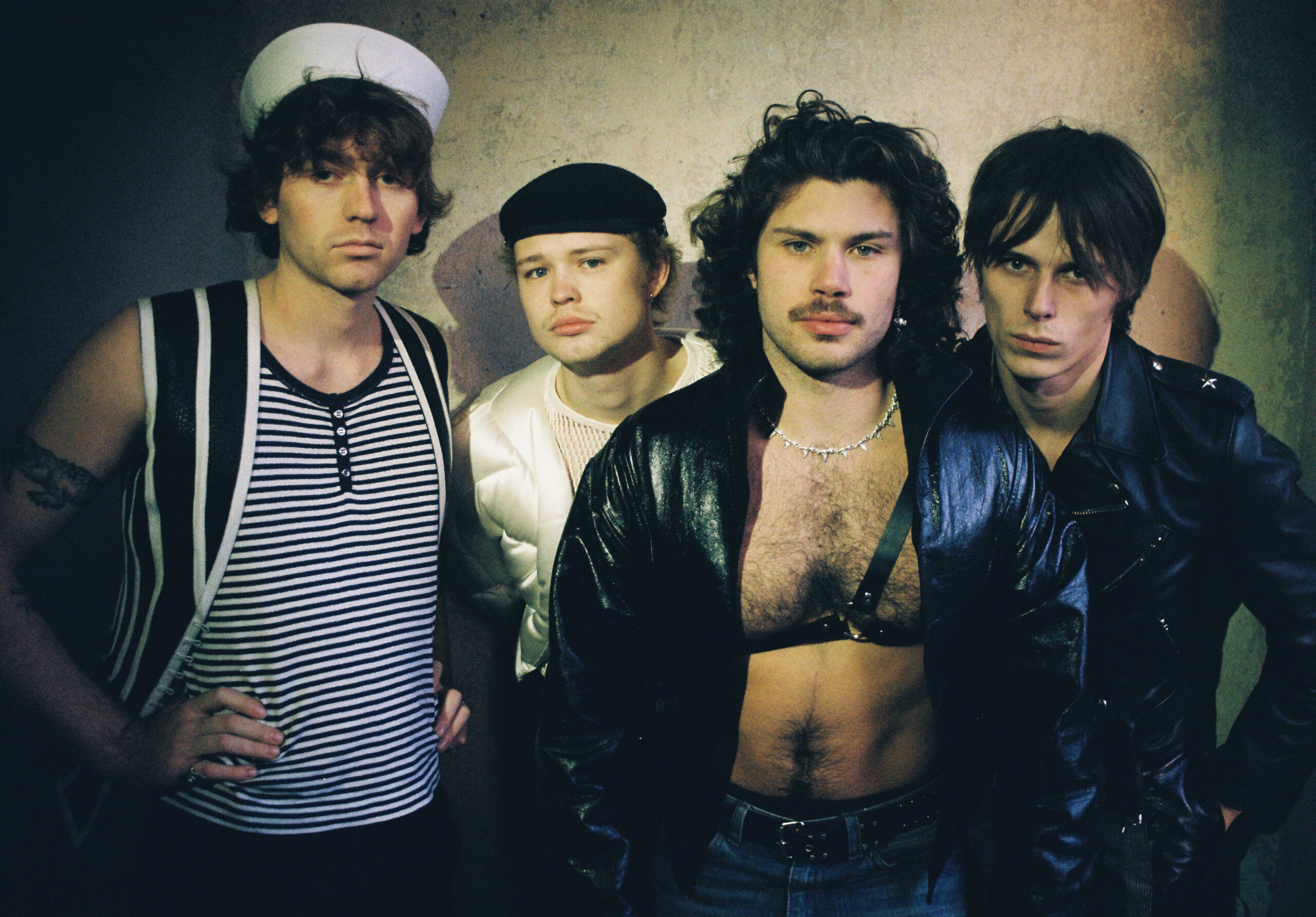
That was less than a year ago. Now, I am at a rehearsal with the boys, post successfully haranguing them into a Tom of Finland-inspired photoshoot styled with Gio Levan clothes, designed by my long-time best friend. The band is still newborn, having started after Martin (drums) borrowed a lighter from Max (guitar and vocals). Jona (bass and vocals) would join soon thereafter, with Michael (guitar) being the newest addition. All but Max are from Norway, and all but Michael met at a university they would later drop out of. There’s a bit of bickering as to how exactly to tell the story, but ultimately after a lighter was borrowed, Jona says “I arrived to the cafe, and I saw the two of you, and you had already decided to start a band.” Easy enough.
The name is compelling, born from a feminized Bukowski reference. Martin remembers: “Jona gave me this book by Charles Bukowski called Post Office. In this book, he’s a miserable postman and he has a terrible boss, and he called his boss a bullneck. And for some reason, that resonated with me.” But there was too much masculinity in that descriptor alone, so Ballerina was added. Michael says: “I joined later, you know, I didn’t create…but to me it was always perfect, kind of, because there’s definitely, like, the music is hard and rough, but there’s also a sensitivity…It’s two sides, and it reflects the music very well. The music comes from being kind of, at least for me, over-emotional.” He pauses briefly before tacking on, “But I’m also a dude.” He says it genuinely; it’s sweet. And it rings true. While the instrumentation and almost yawp-esque vocals of Bullneck Ballerina can at times feel harsh, it never crosses a line beyond sincerity or into severity. There’s no posing. The name is apt: power and deliberateness meet a certain type of earnest grace. The first conversation we had, a breaking of ice at a bar before the photoshoot, I asked Max how it felt to perform on stage. He said he didn’t really think about it; it was a space where he just did what he felt, and he didn’t worry about what he looked like or whatever else.
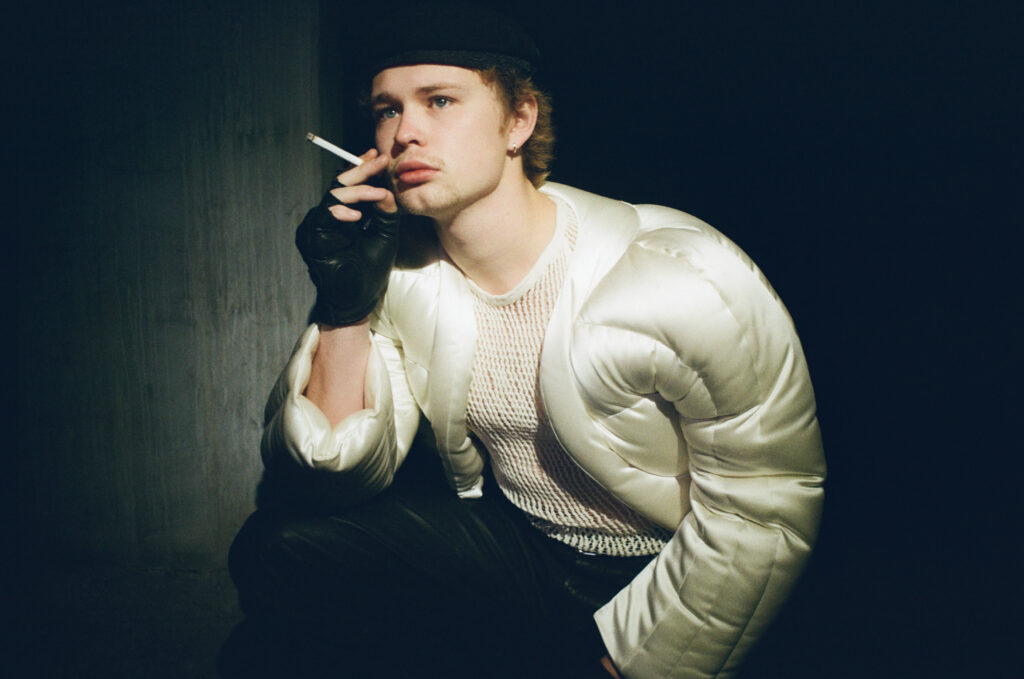
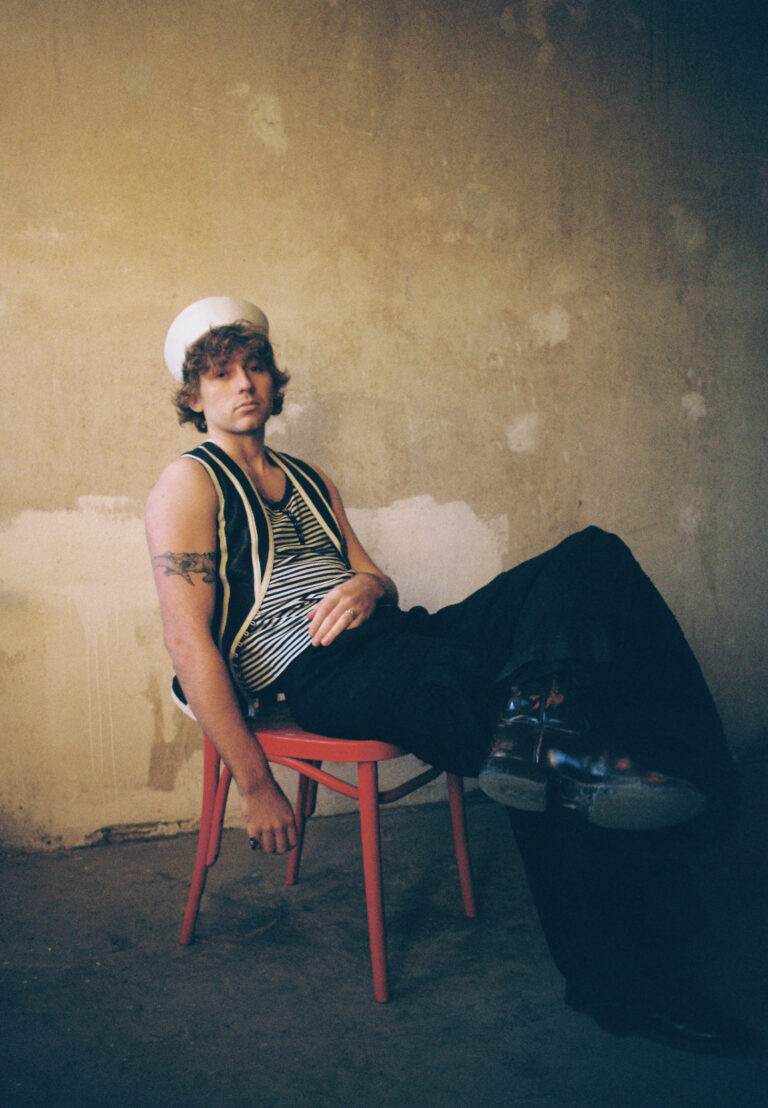
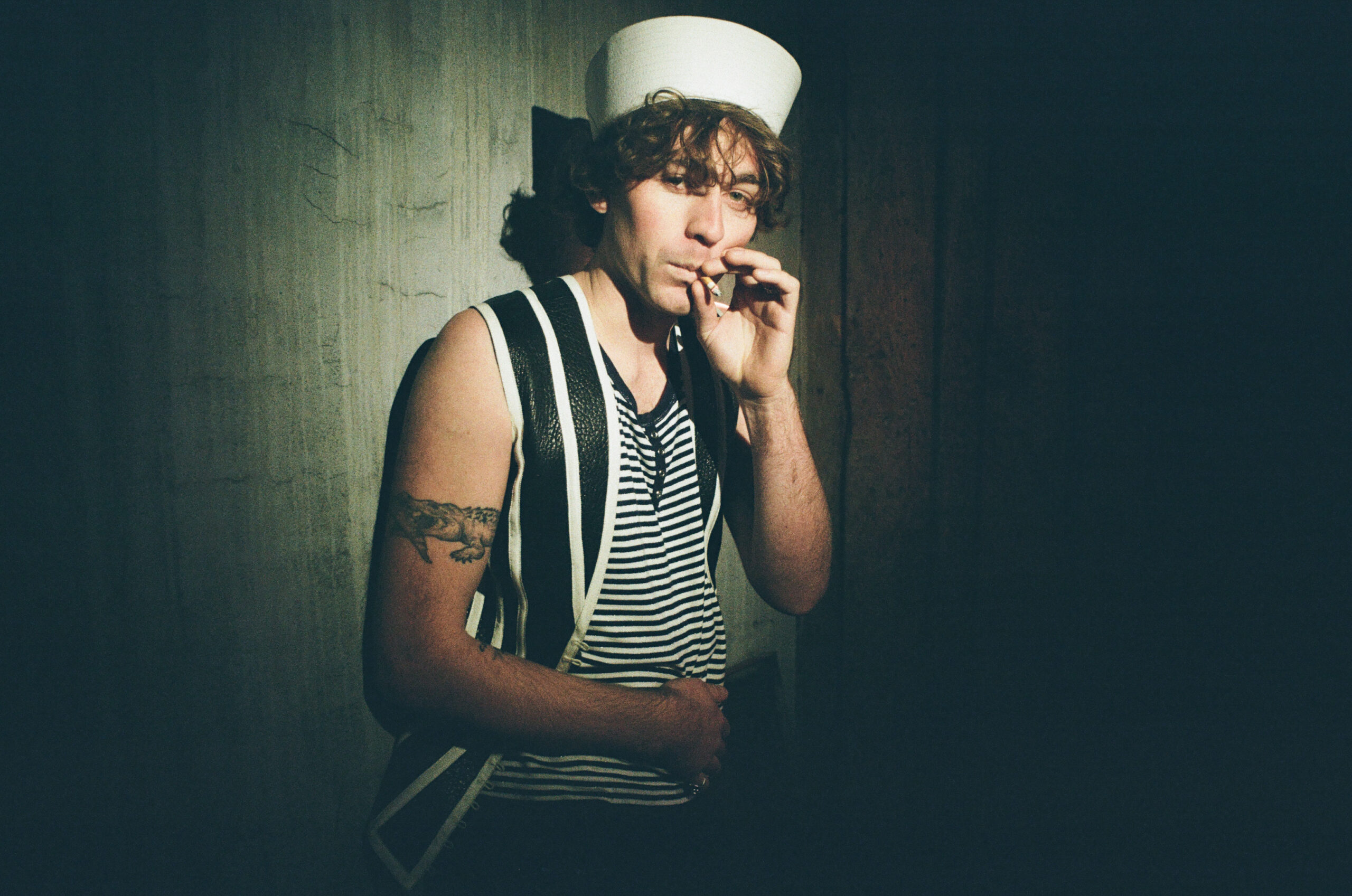
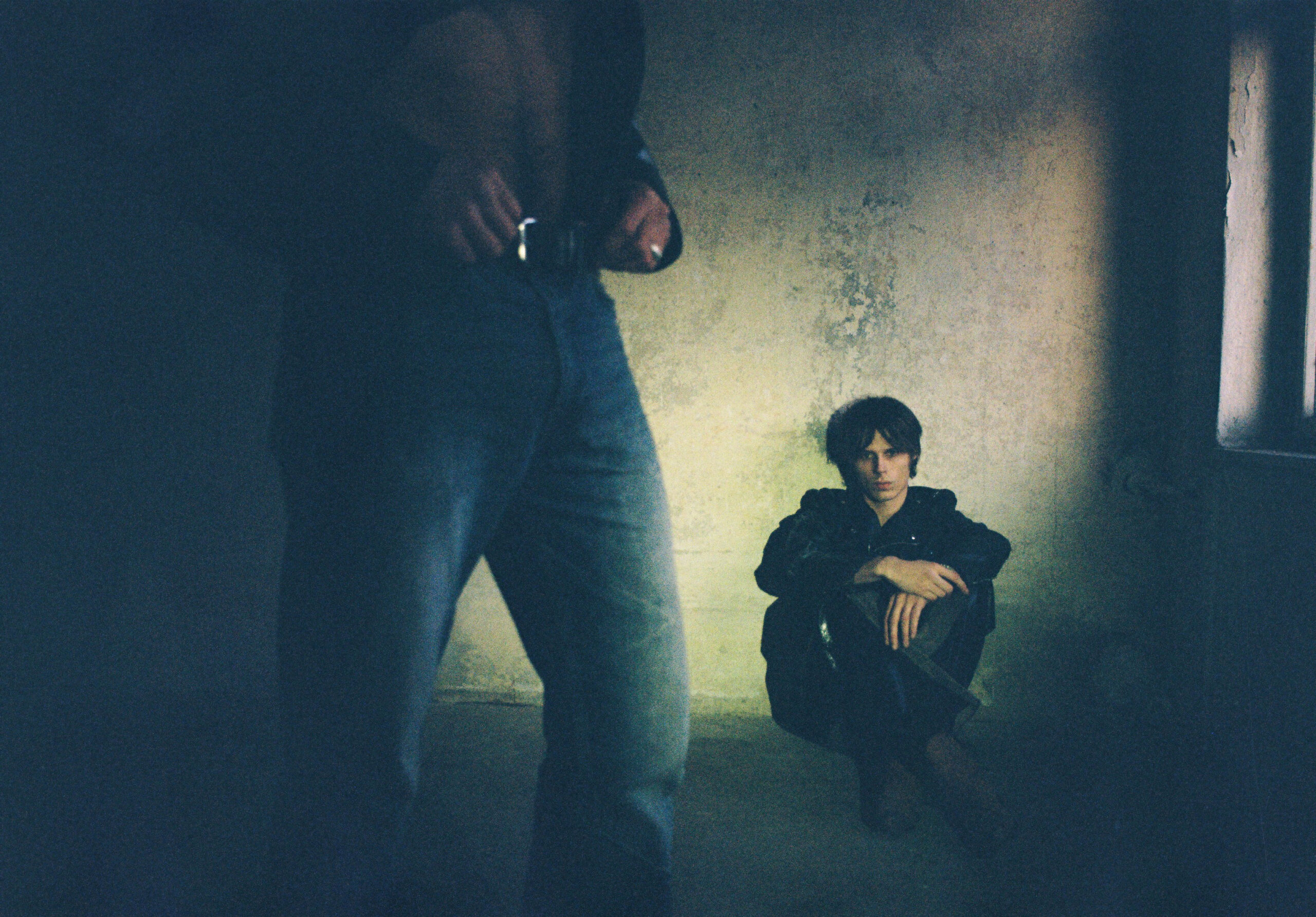
This feeling seemed to infect all of them at our photoshoot. I had come to them, with Gio in tow, asking them to model these clothes from a debut collection from an unknown designer. In part, I wanted to shoot a campaign for these beautiful clothes made by a dear friend. But also, it was largely an excuse to find myself close to artists I was compelled by. Gio and I worried they wouldn’t be interested, or wouldn’t be comfortable with our vision, but they were down for whatever. Our “whatever” ended up being a lot of homoeroticism in a dusty attic space. And surely, there was a sense of naivety and newness amongst the band, but there was overwhelmingly a sense of comfort between the boys. Gio and I were probably more awkward than they could’ve possibly been, what with our perma-flush constantly stoked by dressing, undressing, and redressing four men. But hey, if needs must. Over the course of the shoot, we witnessed in them this dichotomy between masculinity and tenderness, not forced or directed, but inherently present. It was as if in any single frame, you could be fooled into thinking they were some beacon of young manhood, but the second you caught them in motion, you saw the softness. To watch them interact with one another is to be endeared to them.
With only two demos on Soundcloud and a few live videos here and there, it’s hard to be a fan at this precise moment, but being a fan at this moment inherently provides anticipation. It also makes the occasional gig all the more rare, in every sense of the word: scarce, unique, and precious.
They avoid cliches and gimmicks, focusing instead on making music they’d like to listen to. Rehearsal can feel tense at times, not with bad feelings, but with a clear anxiousness to produce something they’re proud of. “One of the first things that Martin ever talked about,” recounts Jona, “is that when you have an idea, musically, and you play it or sing it for yourself, and you can’t trace it back to anything, when it comes out of your subconscious like that, that’s when you have something authentic and true to yourself…I’ve been thinking about that ever since.” This sentiment lines up with their music; it’s not derivative. The inspirations you might pin to them don’t seem to have crossed their mind, and totally foreign sounds are held close to heart (Townes Van Zandt wouldn’t be immediately conjured when listening to “Stalemate,” but it’s his song played during the photoshoot that seemed to draw some of the most fondness).
The band is clearly well informed of those that came before them, reverently so, but they don’t imitate anyone, and certainly don’t rip anyone off. They have a distinctive ability to circumvent canon and trend in favor of making music that resonates with them. When asked how the Berlin scene influences them, they take a beat. No one wants to write off the clearly booming local milieu, and yet, it’s of little consequence to their music. They pay appropriate respect to their peers, ultimately saying, though, that “there’s no real influence.” It sounds like a potentially alienating place to be in, but perhaps the most innovative art happens as the fruit of alienation. After all, they don’t necessarily plan on being here long term. David Bowie, Iggy Pop, and Nick Cave are listed as the primary reasons to be in Berlin, only one of which, and only some of the time, still maintains more than a ghostly presence in the city.
Their songwriting process sounds like less of a formalized ritual and more of an openness to whatever might come into being. “I’m a perfectionist man; I just fucking write,” says Max, seemingly unaware of the potential contradiction. According to Michael, “There’s a lot of talking. There’s like, more talking than writing.” Max says he starts with an idea of how he pictures a song, to which Jona adds, “Yeah, and then a lot of noodling with peddle boards while Martin and I go have a cigarette.” Beyond the brotherly poking-fun, Max says more seriously, “Before we had any real focus, it was just having an outlet, I guess, creatively…And we’re still very young. These songs are less than a year old.” Generally, it seems as if the songwriting process is one that pursues perfection without trying to squeeze it out of anywhere it’s not naturally pouring from. For the future, Jona says he hopes they keep just jamming and seeing what comes out of it. All of their music does have a certain flow to it that doesn’t feel mechanized at all; it feels like musicians wending their way around and under and over one another until they find a comfortable place to rest.
When asked about their fantasies of one year down the line, Martin first declares their determination to leave Berlin. They’re coy, sharing their hopes to be alive and relevant, before saying: “We want to do everything.” They tell me they have three songs recorded, but they don’t want to feel rushed. “We want it to be good. It has to be good,” Max says. “We want things to work out in our own pace,” says Jona. Michael responds, noting that “It’s not like there’s any real pressure. We don’t have anyone waiting on us.” That’s perhaps true, although I myself am geared up for a recorded album. It’s nice, though, and a bit surprising to hear a young band be so patient with themselves; they’re dedicated primarily to making good music rather than developing any sort of persona or climbing any sort of social ladder.
I ask them what the most important aspect of music is, and how they imbue their own music with whatever that important thing is. Michael immediately answers: “Enhancing feelings.” Jona concurs, adding, “ Yeah, authenticity for sure. But first of all, we’re mates, right? It’s fun doing this shit together. And it’s important that it’s fun. Otherwise, it’s just no good.” Michael continues, saying music is meant to “Capture a feeling. Capture a specific feeling. To me, I just want to make music that makes me feel…That’s the ultimate goal, isn’t it? To make music that makes you feel the way other people’s music makes you feel.”
Max interjects, explaining the importance of idiosyncratic voices on the same topics: “If Jim Morrison says something in his music, then it’s completely different to the way that David Bowie would say the same thing…You resonate with it differently. At least for me, the songs that I write, I hope people resonate in a unique way. I know I’ve written songs where the DNA of the song is something someone else has said before, but it’s about saying it in your own words. In real words but also in the music as well.” To put my cards on the table, beyond the “Brave Ballet” refrain in the eponymous song and another snippet about “Your desire,” I’ve not got the foggiest idea what some of the lyrics are. But the music does resonate with me, in the sound itself, and that perhaps is a rare thing about music: feelings can be communicated without words.
Michael jumps in again, saying “You feel the song yourself, which is very hard to accomplish. You write a hundred songs and you maybe feel two or three of them. You write a song, or I used to write songs and it was like immediately, no that sounds like shit, fuck that. And I just scrapped it, scrapped everything. But it’s about knowing when you feel a lot and it’s something you made, something you created. When it comes from a deep feeling, when it didn’t come from you trying to create something, when it kind of just happens, I think that’s where the real magic is.”
With any luck, Bullneck Ballerina will, in fact, do “everything” this year. Hopefully, the first thing on their to-do list is releasing music so others can resonate uniquely with the music I’ve been holding onto in memories of live performances all year.
Thanks to…
Bullneck Ballerina, models @bullneckballerina: soundcloud.com/bullneckballerina
Alicia Nieto, photographer: @aliciaxnieto
Johanna Weilert, lighting and photography assistant: @johannaweilert
Giorgia O’Sullivan, stylist: @giorgia.osullivan
